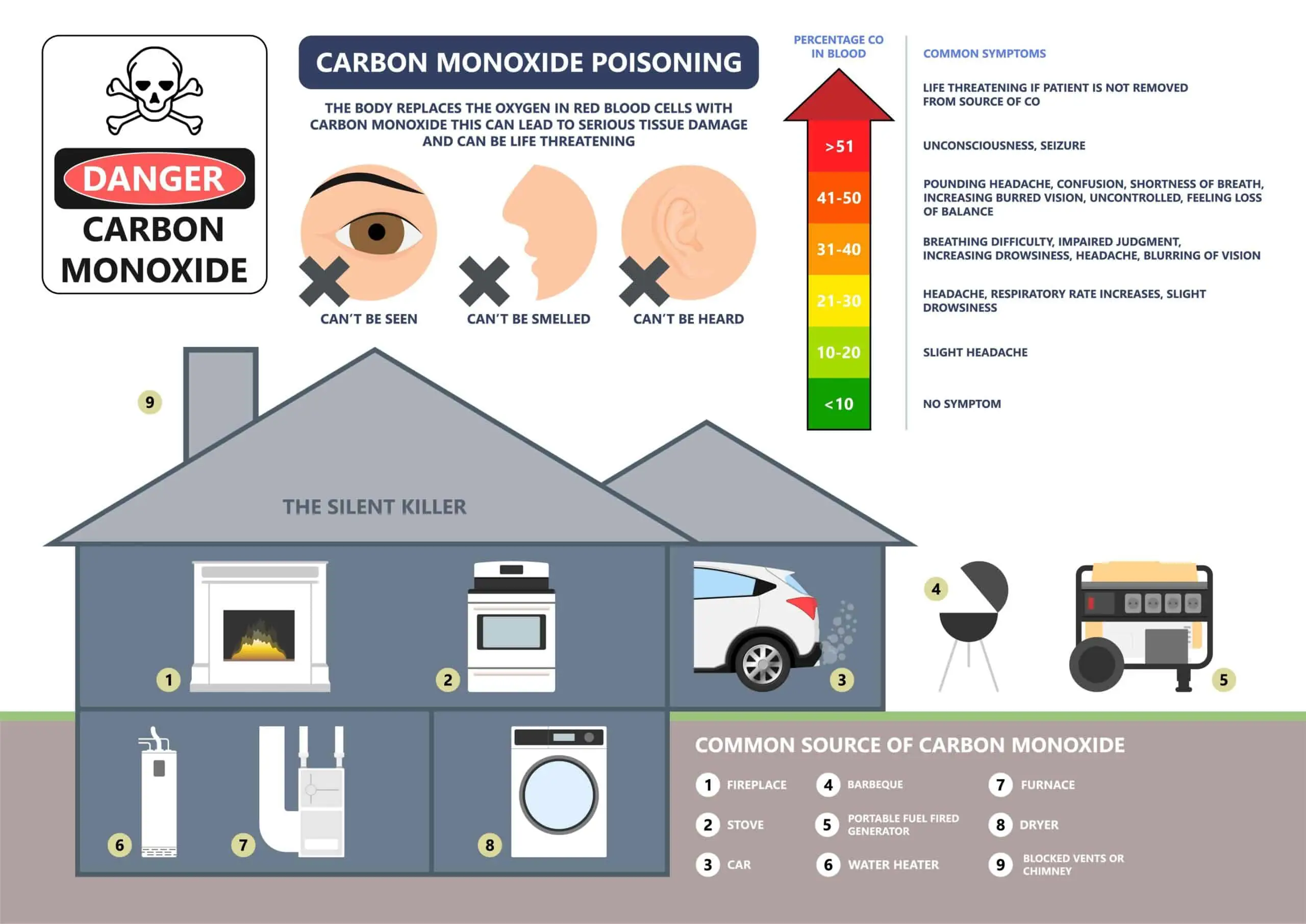
This is usually the time of year the KMFD gets carbon monoxide (CO) alarms due to the increased use of electrical generators, space heaters and doors and windows being kept closed during colder weather. CO is often called the “silent killer” because it is colorless, odorless and tasteless. Even at low levels, CO can cause illness, and high concentrations can be fatal within minutes. With proper maintenance, safe appliance use and correctly installed detectors, the risk of CO poisoning can be dramatically reduced. Please use the general information below to know what dangers may be present in your residence and ways to protect you and your family from CO poisoning.
What is Carbon Monoxide?
CO is a poisonous gas produced when fuels such as natural gas, propane, oil, wood, charcoal, gasoline or diesel do not burn completely. In the body, CO displaces oxygen in the bloodstream, preventing vital organs from receiving the oxygen they need. Early symptoms of CO exposure include headache, dizziness, nausea, fatigue, confusion and shortness of breath. Because these symptoms resemble the flu, people often fail to recognize the danger until it is too late.
Common Residential Sources of Carbon Monoxide
CO can be produced by any fuel-burning appliance or garage door open, CO can accumulate quickly and engine. Typical household sources include:
- Gas furnaces and boilers
- Water heaters (gas or propane)
- Fireplaces and wood stoves
- Gas ranges and ovens
- Clothes dryers (gas-fired)
- Portable generators
- Charcoal grills and propane heaters
- Automobiles running in attached garages
- Gas-powered lawn equipment or snow blowers
Even appliances that are functioning properly can produce CO; the danger arises when the gas cannot vent safely outdoors.
Common Issues that Lead to Carbon Monoxide Incidents
- Operating fuel-burning devices indoors. Running generators, grills or patio heaters inside a home, garage or even near open windows is a frequent and
deadly mistake. - Blocked or damaged vents and chimneys. Bird nests, debris, corrosion or disconnected vent pipes can prevent exhaust gases from exiting the home.
- Improperly maintained appliances. Cracked heat exchangers, misaligned burners or dirty components can cause incomplete combustion.
- Vehicles left running in garages. Even with the garage door open, CO can accumulate quickly and seep into the home.
Good Safety Practices
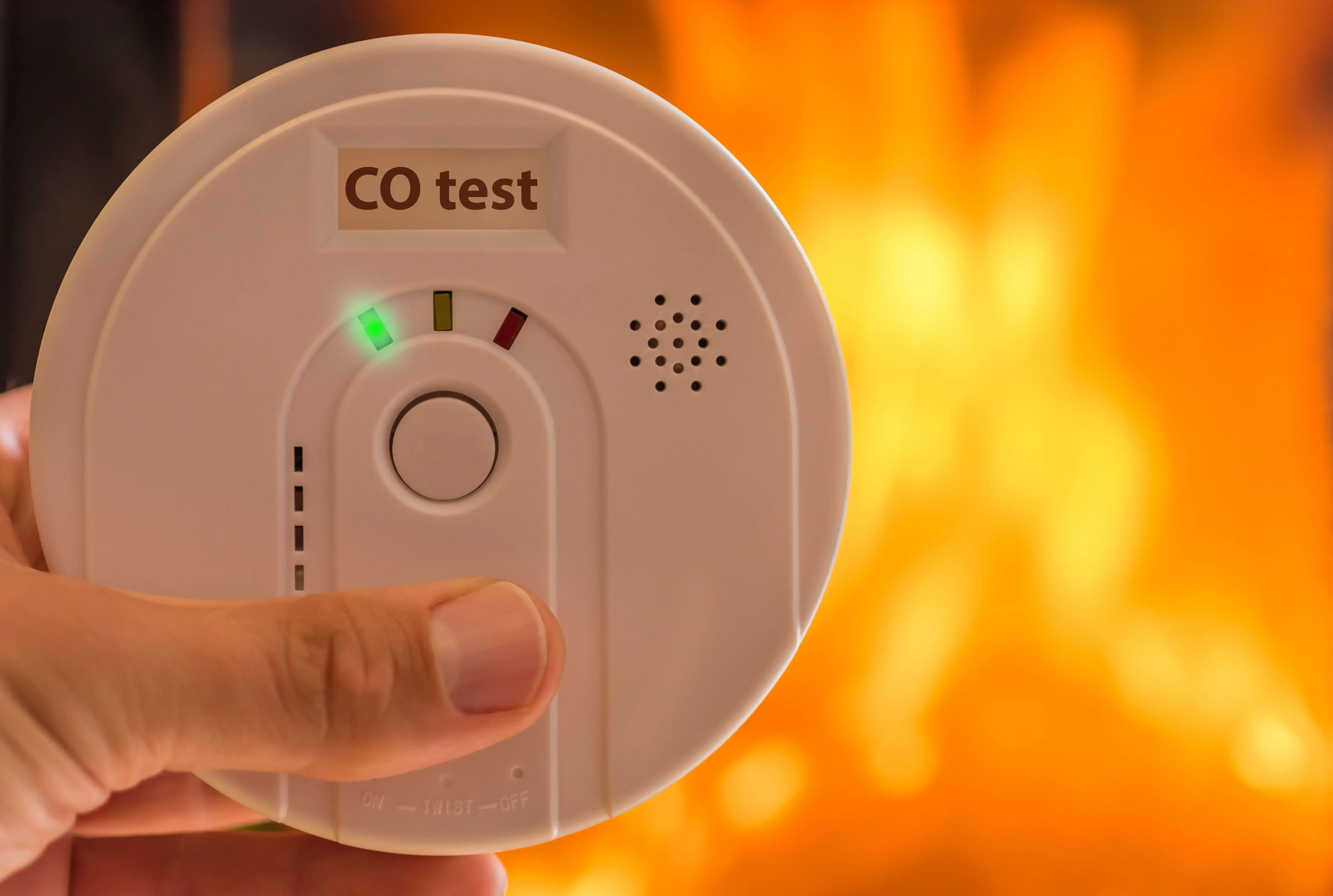
Install and maintain CO detectors on every level of the home and near sleeping areas and test regularly. If a CO alarm sounds, move everyone outdoors to fresh air immediately and call 911 from outside the building.
- Keep vents and chimneys clear of obstructions and ensure vent connections are secure.
- Never use generators, grills or fuel-burning heaters indoors or in garages. Place generators at least 20 feet from the home, with exhaust directed away from windows and doors.
- Never leave a vehicle running in an attached garage, even for a short time.
- Do not use ovens or stovetops to heat your home.
Proper Placement of CO Detectors
- Install at least one CO alarm on each level of the home, including the basement.
- Place alarms outside sleeping areas, so they can be heard at night.
- Install alarms 10–20 feet from fuel-burning appliances to reduce nuisance alarms while still detecting leaks.
- Mount on a wall about 5 feet above the floor or on the ceiling (follow manufacturer instructions).
- Avoid placing detectors in kitchens, furnace rooms, bathrooms, or within 10 feet of cooking appliances.