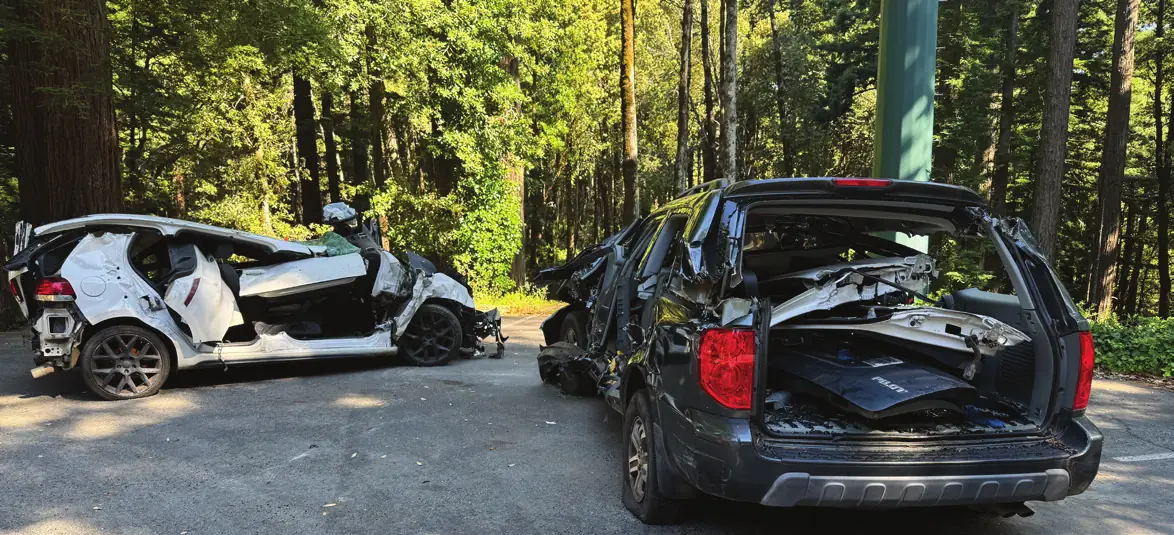
A number of Kings Mtn. residents recently noticed some slightly (or more than slightly) cut up cars in the Community Center Parking lot, and were inquiring if those cars were in an accident; well sort of! Each year, the KMFD receives car donations for vehicles that either: have been in an accident, not drivable, or just past their prime, and have little trade in or donation value. The KMFD uses these vehicles for training to insure we are ready for vehicle accidents that have patients entrapped in vehicles, need stabilization to effect rescues, or need lifting to gain access or free occupants. These trainings help us ensure the safety of rescuers, patients, and speed patient care in some very high vehicle impact collisions incidents. Here are some of the basic techniques and tools we employ:
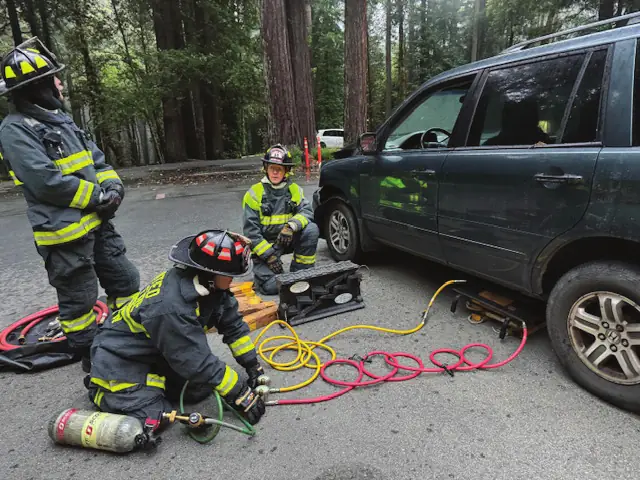
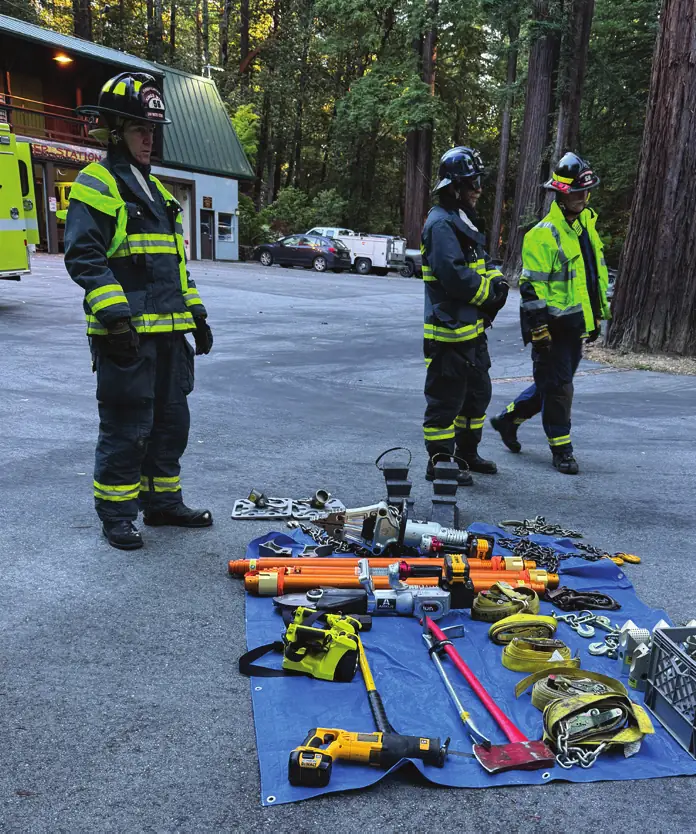
Air Lifting Bags: These bags can be deployed both with small and large sized bags for heavy object lifting. Once placed underneath an object, we inflate the bags with compressed air to lift objects between a few inches to a few feet. Once the object is raised to the desired level, we use lumber for cribbing and rescue struts to brace, to more securely stabilize the object, and help free trapped occupants.
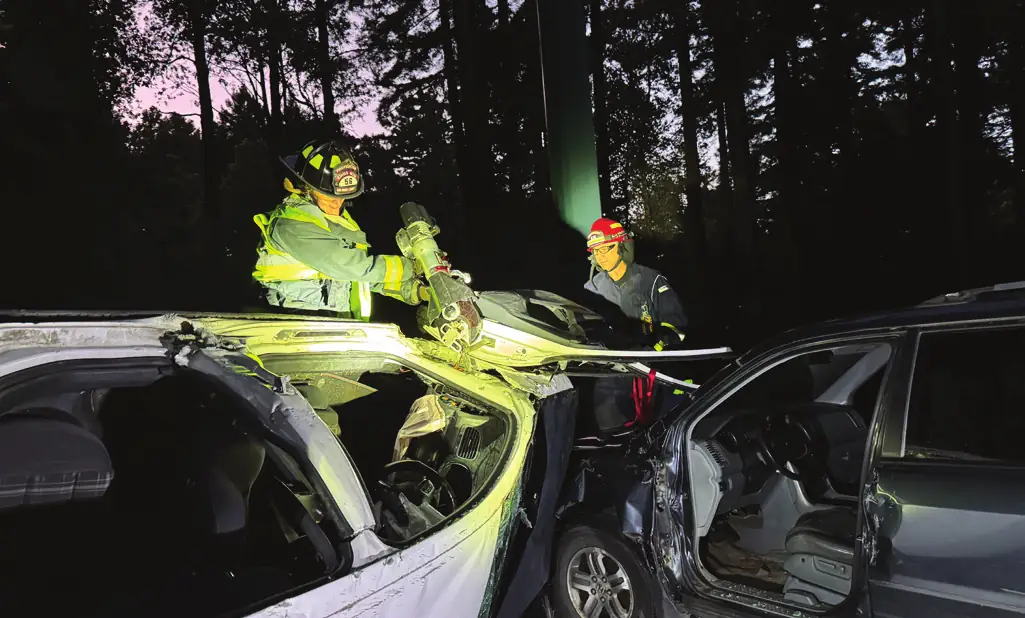
Hydraulic Rescue Tools: a.k.a. “Jaws of Life”. These tools help us cut, pry, break, stretch, open doors, and generally dismantle cars to extract occupants. In the past, these hydraulic tools were connected by high pressure hoses to a portable hydraulic generator. They were quite heavy and cumbersome to use. The newer generations of hydraulic tools are now battery powered, still quite heavy, but much more portable to quickly deploy to vehicles, easier to set up, and can reach due to the length of our hydraulic hoses.
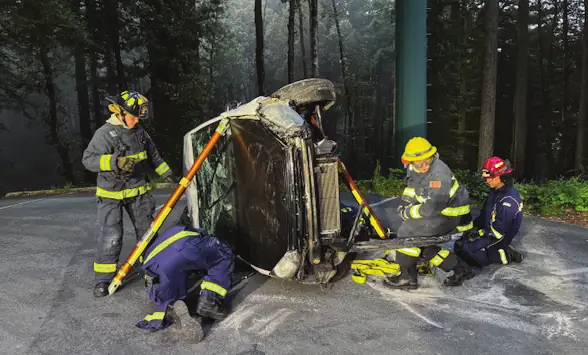
Stabilization Struts: If a vehicle lands on its side or remote locations which were, in the past, inaccessible on a hill after a vehicle collision, it can be both unstable for rescuers to enter a vehicle to provide medical aid and extraction for occupants trapped inside and also very dangerous for the patients trapped, if the car continues to move. Rescue struts can be quickly deployed to prop unstable vehicles, while securing the strut bases and tops with chains and high tension straps, both to the ground and vehicle.
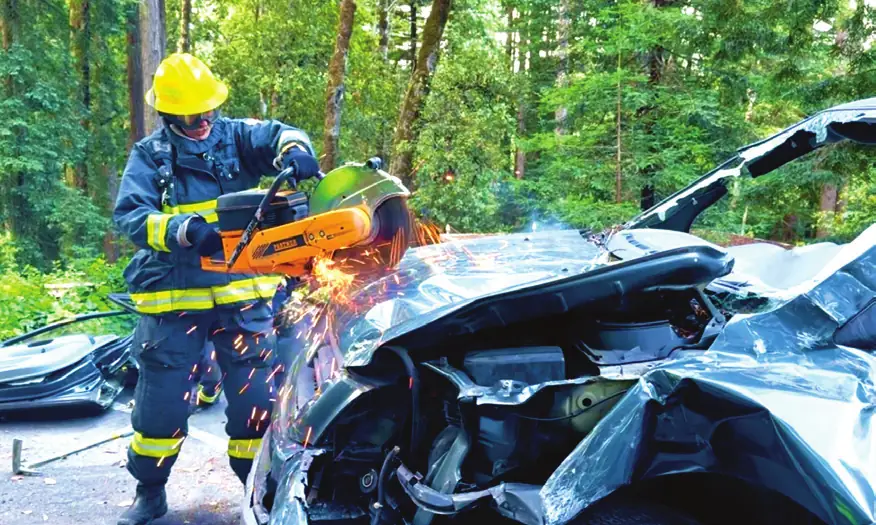
Recue Saws: These are battery-powered saws, both circular and reciprocating, that can be used to cut through metal and glass, to gain access underneath a hood to extinguish fires, quickly gain access to locked trunks, cut out windshields, and saw through metal vehicle posts.
As one might imagine, with all these battery-powered tools, we run through a fair number of rechargeable batteries during an extended rescue. Our new rescue vehicle (R56) carries extra charged batteries, along with battery chargers, to keep us in business. Operating around these tools and vehicles can be dangerous for both the rescuers and vehicle occupants, with flying glass, metal shavings, unstable cars, and flying sparks. We operate with the upmost safety precautions and equipment for the rescuers and patients, both during training and real-life rescues.
Recap of the CPR Certification Class
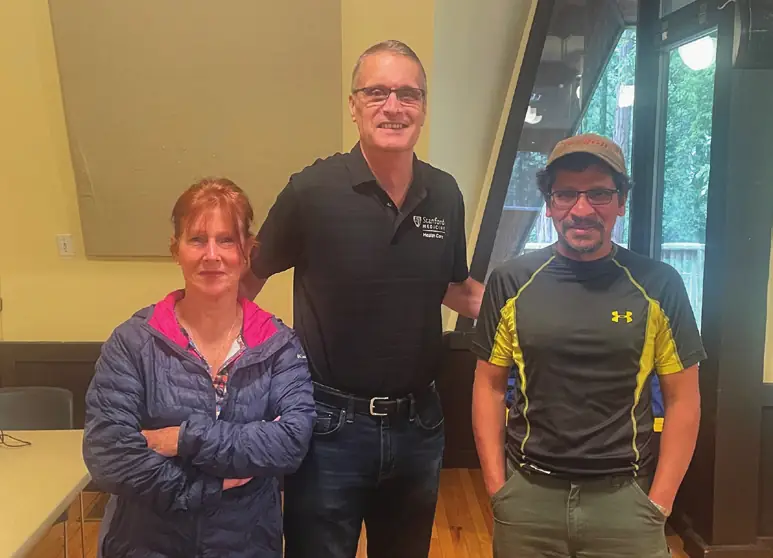
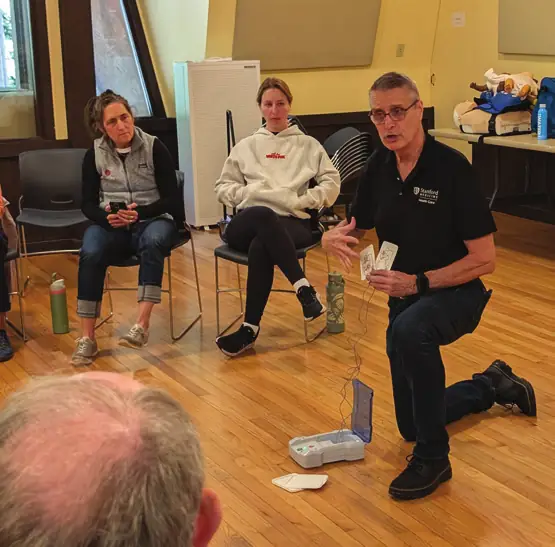
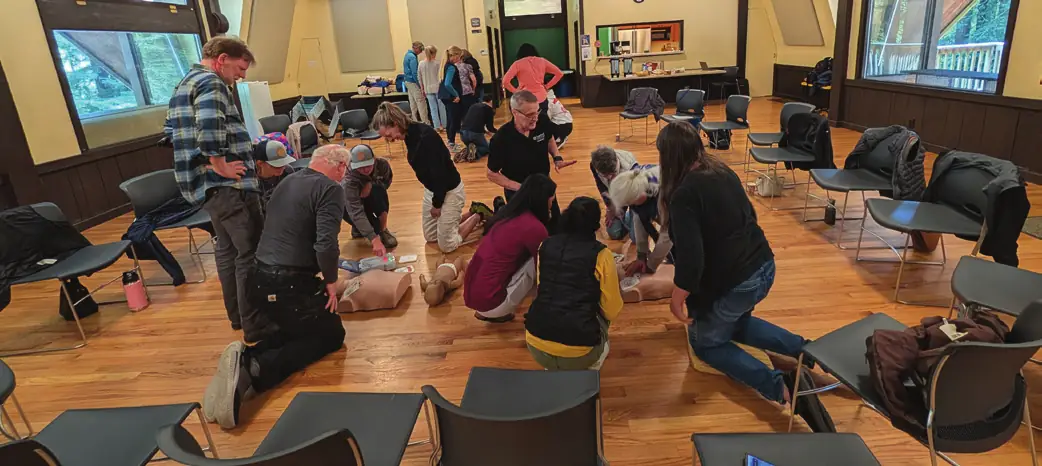
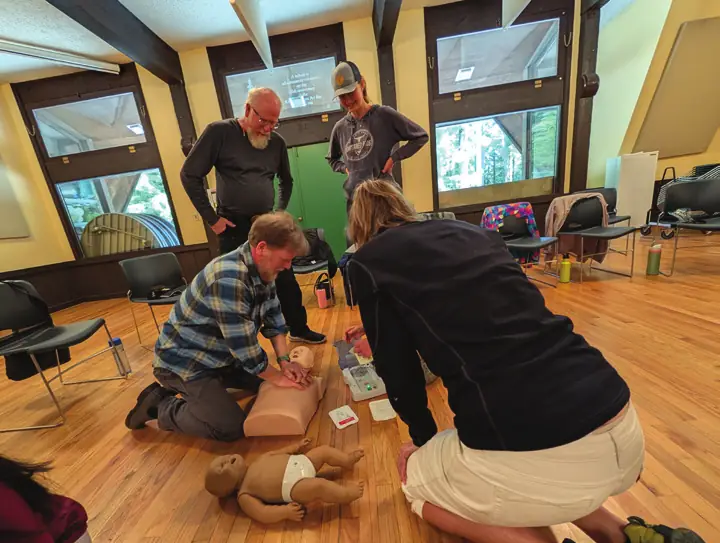
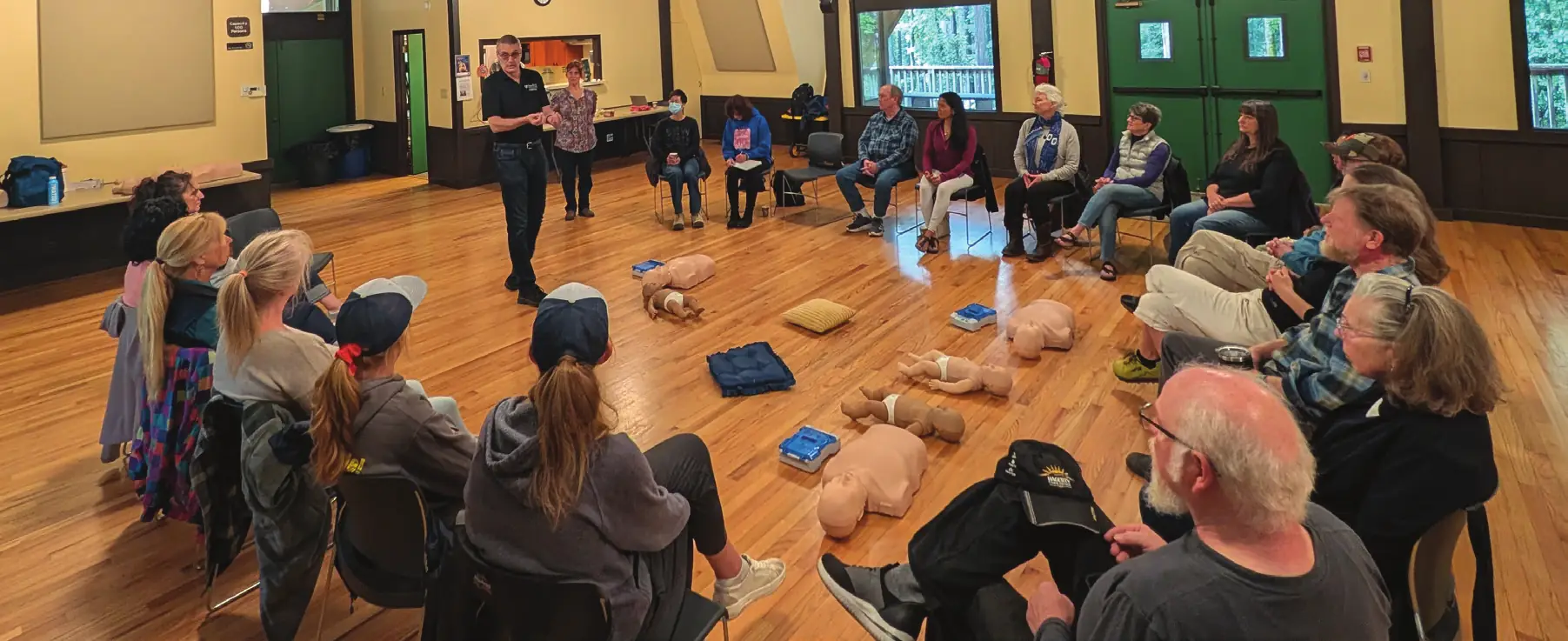
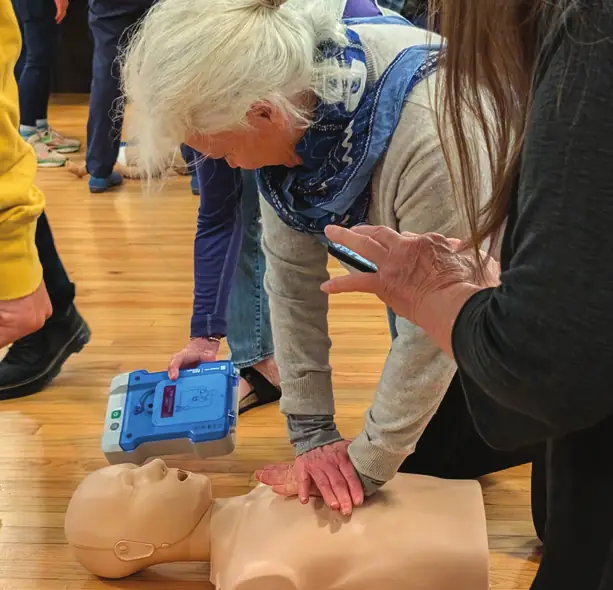
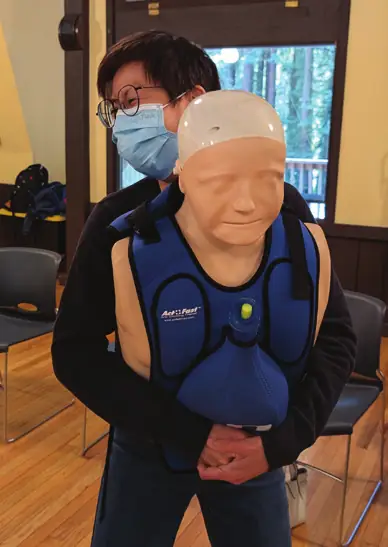
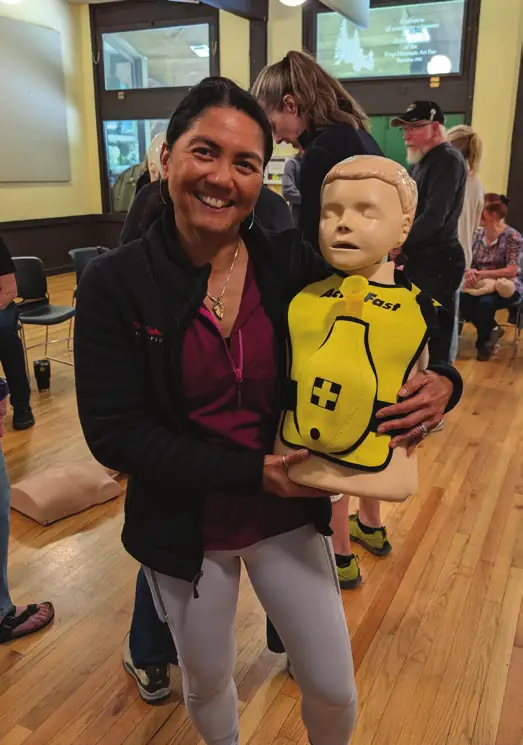
The KMVFB board hosted a CPR class at the community center on 7/26/2025. Al Gook from the Center for Education, Research & Professional Development, at Stanford Health Care, was the lead instructor, ably assisted by Kathleen Bevin. Thirty-five thousand heart attacks happen outside a hospital setting every year, 80% in someone’s home. High-Quality Chest compression is the key to survival. The 20 enthusiastic participants learned proper techniques during the class, including the use of an AED. It is important to note that the American Heart Association continually updates CPR guidelines every five years, underscoring the importance of maintaining current certifications and skills to ensure optimal effectiveness in emergency situations. We are pleased to announce that the KMVFB plans to offer another CPR class in the coming year, providing more opportunities for our community members to become prepared and confident in responding to cardiac emergencies. Thanks go to Sumit Roy for organizing this class!